
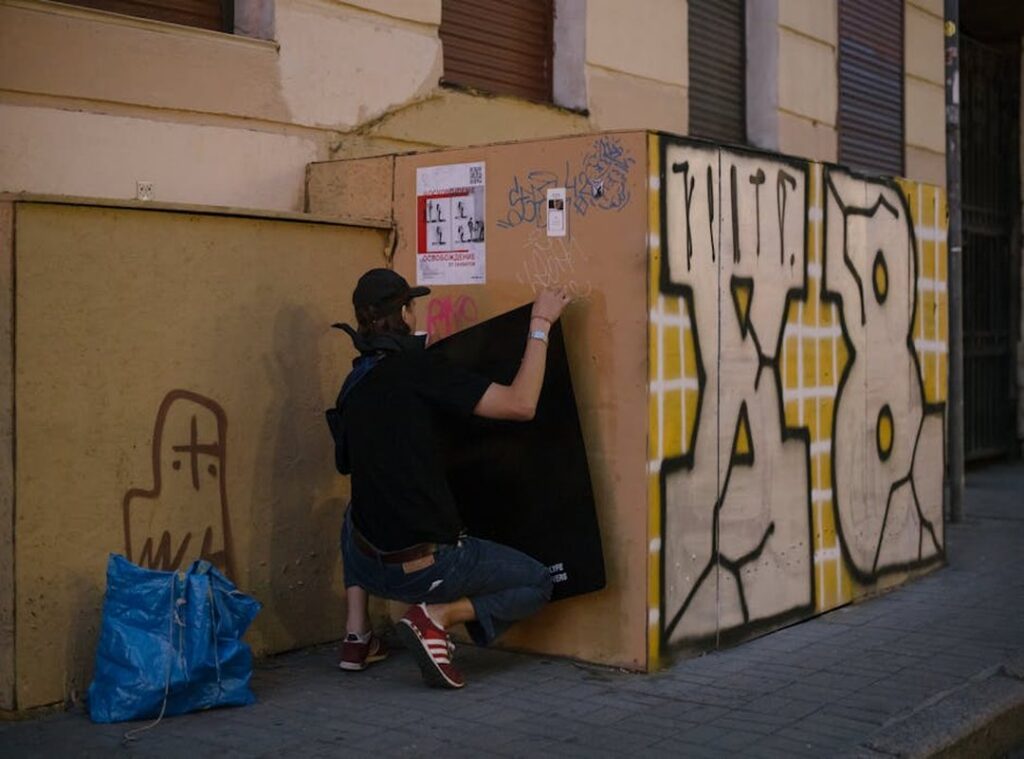
Walking by a dull city wall and suddenly seeing a vibrant mural, it’s like the whole street comes alive. You can’t help but stop and stare, right? Graffiti art has that power.
But let’s be real, it seems complex and intimidating. There’s a high barrier to entry, and the culture can feel confusing.
This guide is here to change that. I’m going to break down callejero graffitis faciles into simple, step-by-step tutorials. We’ll cover the basics, from choosing your tools to mastering can control and letter structure.
These techniques are built on foundational skills used by artists for decades, stripped down to the essentials. No fluff, just what you need to get started.
By the end, you’ll know how to practice safely and legally. Let’s dive in and turn those blank walls into bold statements.
Choosing Your Arsenal: A Beginner’s Guide to Spray Cans and Caps
When you’re starting out, choosing the right spray paint can make or break your experience. Let’s break it down.
Hardware store paint, like Rust-Oleum, is cheap and widely available. But it’s not the best for detailed work. Artist-grade spray paint, such as Montana or Molotow, is designed with better pigments and valve systems.
Pressure: Hardware store cans have high pressure, which can be hard to control. Artist-grade cans, on the other hand, offer low pressure, making them more forgiving for beginners.
Pigment: Artist-grade paints have higher-quality pigments. This means they provide richer, more vibrant colors. Hardware store paints can look dull and may not cover surfaces as well.
Valve Systems: The valve in artist-grade cans allows for a smoother, more consistent spray. This is crucial for clean lines and even coverage.
For beginners, I recommend starting with low-pressure cans. They offer more control and are perfect for learning line work. Trust me, it makes a huge difference.
Now, let’s talk about caps (nozzles). You’ll need a few different types:
- Fat caps: These are great for filling large areas quickly. Perfect for backgrounds.
- Skinny caps: Use these for outlines and details. They give you more precision.
- Specialty caps: Needle caps, for example, are ideal for super fine lines and intricate details.
Here’s a beginner’s shopping list:
– A can of black
– A can of white
– A fill color (choose your favorite)
– A pack of assorted caps
– A high-quality respirator mask
– Gloves
Safety gear is non-negotiable. A good respirator mask protects you from fumes and particulates. Gloves keep your hands clean and prevent accidental smudges.
Pro tip: Shake the can for at least two minutes before use. This ensures the paint is well mixed. After you’re done, clear the cap by spraying it upside down.
This keeps the nozzle from clogging.
With the right tools, you can start creating callejero graffitis faciles and build your skills over time.
Mastering the Can: Essential Spray Paint Control Techniques
Can control is everything in graffiti. It’s the foundation of all your work. The distance from the wall affects line thickness and opacity.
Closer means sharper, thinner lines. Farther gives you softer, wider ones.
First, practice basic lines. Grab some cardboard or find a legal wall. Draw straight lines, curved lines, and circles.
This builds your muscle memory.
Now, let’s talk about fading. It’s all about varying the distance and spray angle to create gradients. This is key for fills.
Start close for a sharp edge, then move the can farther away as you spray. You’ll see the color fade out naturally.
Another classic technique is the flare tag. It’s a quick, sweeping motion that creates a line tapering at the ends. Perfect for adding flair (no pun intended) to your tags.
Here’s a practice drill: make a can control board. Fill it with different lines, dots, and shapes. Consistency is key.
Use smooth, consistent arm movements. Moving just your wrist is a common mistake. Your whole arm should be involved.
callejero graffitis faciles are a great way to start. They help you get a feel for the can and build your confidence. Keep practicing, and soon you’ll see your skills improve.
Developing Your Style: From Simple Tags to Complex Lettering
Let’s start with the basics. The tag is the foundation of all graffiti. It’s a stylized signature, and it’s where you begin to build your style.
Why start with tags? They’re simple, quick, and help you get a feel for the tools and the surface. Plus, they’re the building blocks for more complex pieces.
- Start with your own handwriting. Keep it legible.
- Practice in a sketchbook (blackbook) first. This is crucial.
Once you’ve got a good handle on your tag, you can move on to something a bit more complex: the throw-up or throwie. These are simple, bubble-style letters that can be painted quickly, usually with an outline and a one-color fill.
Here’s a quick tutorial on basic letter structure. Take a simple word, like “style,” and break it down. Start with the skeleton of each letter, then add the block or bubble effect around it.
Letter weight, balance, and flow are key. Letters should interact with each other to create a cohesive piece. If one letter is too heavy, it can throw off the whole design.
Practice makes perfect. Spend time in your blackbook before you ever touch a wall. This way, you can experiment and refine your style without the pressure of doing it in public.
Callejero graffitis faciles are a great starting point. They’re simple, easy to execute, and help you build confidence.
Pro tip: Always carry a small sketchbook with you. You never know when inspiration will strike.
By mastering these basics, you’ll have a solid foundation to build on. And who knows, maybe one day you’ll be breaking down the latest trends in a different kind of art—like breaking down the latest arcade gaming hardware trends.
The Unwritten Rules: Practicing Graffiti Legally and Respectfully

Graffiti can be a powerful form of expression, but let’s get real. Engaging in illegal graffiti is like playing with fire. You could face serious legal consequences, including fines and even jail time.
So, let’s be clear: VANDALISM IS NOT COOL.
Now, here’s the good news. There are ways to practice your art legally and respectfully. One of the best options is to find “legal walls” or “permission walls.” These are spaces where you can paint without breaking the law.
Think of them as the playgrounds for street artists.
To find these spots, check out online forums, local art groups, and community boards. It’s like finding a hidden treasure map, but instead of gold, you find a canvas that welcomes your creativity.
Before you hit the streets, practice on disposable surfaces. Large cardboard boxes, plywood sheets, or canvas are perfect. It’s like training in a gym before stepping into the ring.
You build your skills without the risk.
When you do go out, remember some basic street art etiquette. Never paint over another artist’s work unless your piece is significantly better. Even then, be respectful.
It’s like not stepping on someone else’s toes in a crowded room.
Avoid sensitive locations like places of worship, memorials, and private homes. Imagine if someone tagged your grandma’s house. Not cool, right?
Becoming a respected artist is about skill and respect for the craft and community. It’s not just about getting your name up. It’s about earning your place, like a musician who starts by playing small gigs before hitting the big stage.
Remember, callejero graffitis faciles might look simple, but they require a lot of practice and respect. Keep it legal, keep it respectful, and most importantly, keep it creative.
Your Journey as a Street Artist Starts Now
You’ve learned the essential steps: getting the right gear, mastering can control, developing letterforms, and practicing responsibly. The key to improvement is consistent practice, starting with a sketchbook and moving to legal practice surfaces.
Now, it’s time to take that first step. You have the foundational knowledge to begin your artistic journey with confidence. callejero graffitis faciles can be your gateway to expressing yourself creatively.
Grab a sketchbook and design your first tag. Or find a piece of cardboard and practice your first lines today. Remember, every blank space is an opportunity for self-expression and transformation into art.
 Catherine Jeanspher writes the kind of game reviews and strategies content that people actually send to each other. Not because it's flashy or controversial, but because it's the sort of thing where you read it and immediately think of three people who need to see it. Catherine has a talent for identifying the questions that a lot of people have but haven't quite figured out how to articulate yet — and then answering them properly.
They covers a lot of ground: Game Reviews and Strategies, Esports Coverage in Arcade Games, Player Stats and Achievements, and plenty of adjacent territory that doesn't always get treated with the same seriousness. The consistency across all of it is a certain kind of respect for the reader. Catherine doesn't assume people are stupid, and they doesn't assume they know everything either. They writes for someone who is genuinely trying to figure something out — because that's usually who's actually reading. That assumption shapes everything from how they structures an explanation to how much background they includes before getting to the point.
Beyond the practical stuff, there's something in Catherine's writing that reflects a real investment in the subject — not performed enthusiasm, but the kind of sustained interest that produces insight over time. They has been paying attention to game reviews and strategies long enough that they notices things a more casual observer would miss. That depth shows up in the work in ways that are hard to fake.
Catherine Jeanspher writes the kind of game reviews and strategies content that people actually send to each other. Not because it's flashy or controversial, but because it's the sort of thing where you read it and immediately think of three people who need to see it. Catherine has a talent for identifying the questions that a lot of people have but haven't quite figured out how to articulate yet — and then answering them properly.
They covers a lot of ground: Game Reviews and Strategies, Esports Coverage in Arcade Games, Player Stats and Achievements, and plenty of adjacent territory that doesn't always get treated with the same seriousness. The consistency across all of it is a certain kind of respect for the reader. Catherine doesn't assume people are stupid, and they doesn't assume they know everything either. They writes for someone who is genuinely trying to figure something out — because that's usually who's actually reading. That assumption shapes everything from how they structures an explanation to how much background they includes before getting to the point.
Beyond the practical stuff, there's something in Catherine's writing that reflects a real investment in the subject — not performed enthusiasm, but the kind of sustained interest that produces insight over time. They has been paying attention to game reviews and strategies long enough that they notices things a more casual observer would miss. That depth shows up in the work in ways that are hard to fake.