
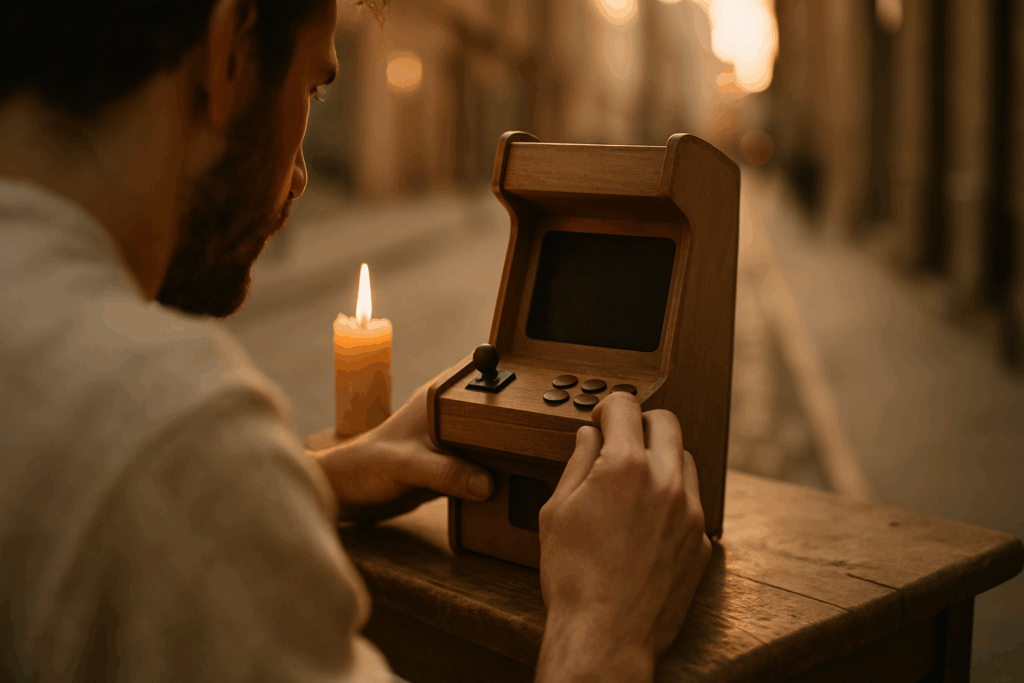
The Arcade Revival, Powered by Indies
Arcades didn’t die they adapted. What used to be row after row of coin hungry cabinets is now a sandbox for indie developers with fresh perspectives and tighter execution. Rather than competing with home consoles or mobile games, modern arcades fill a different niche: physically social, locally built, often bizarre and proud of it.
Indie studios are breathing life into this space by bringing experimental mechanics to the table. Games that play with asymmetrical multiplayer, analog controls, or sensory surprises would be tough sells in traditional market channels. But behind a custom built wood and metal cabinet? Those ideas thrive. These developers aren’t chasing nostalgia they’re remixing it. Classic pixel art meets reactive surfaces. Beat ’em ups fused with rhythm games. It’s old school soul powered by new age design.
At their best, these arcades offer more than entertainment. They offer a chance to touch games again, to feel something in the weight of controls and the hum of a screen. And while they may not flood every strip mall like they once did, their spirit is alive tighter, weirder, smarter.
More Risk, More Reward
Creative Freedom Unleashed
Unlike traditional game studios that often prioritize mainstream appeal and investor confidence, indie developers operate with fewer constraints. This freedom enables them to take creative risks that larger companies might avoid.
No pressure to follow AAA trends
Focus on passion projects rather than proven formulas
More room for personal storytelling, unconventional mechanics, and experimental art styles
Wild Concepts, Real Cabinets
In the modern arcade scene, indie developers are breathing new life into gaming cabinets with bold ideas that would rarely pass a traditional pitch meeting. Whether it’s narrative heavy story games, single button rhythm experiments, or hybrid multiplayer social experiences, these unique creations are changing what an arcade game can be.
Examples include:
Roguelike brawlers with glitchy visuals
One minute story challenges designed around emotional impact
Cabinets that change based on the real world environment or player behavior
A Win for Players Seeking the Unexpected
For gamers who crave variety and innovation, this shift is a welcome change. The indie resurgence is offering:
Experiences you can’t download or duplicate at home
Games that challenge the player’s assumptions, not just their reflexes
A sense of discovery, where no two cabinets (or creators) feel the same
Ultimately, this freedom isn’t just artistic it’s player focused. By stepping off the beaten path, indie developers are redefining what arcade games can mean in the 21st century.
The HCS 411Gits Model
Speed is the name of the game in modern arcade development and small indie teams are treating software like a sprint, not a marathon. The HCS 411Gits model shows what’s possible when you ditch bloated pipelines and focus on lean tech stacks. Modular engines. Lightweight frameworks. Real time collaboration. Instead of working for months before first contact with players, devs are now shipping playable builds in weeks, sometimes days.
With a workflow built on agile principles, testing and feedback aren’t afterthoughts they’re baked in. That means arcade devs can adjust mechanics, fix bugs, or even rework entire systems in real time based on what’s happening on the floor. Streamlining doesn’t just save time, it gets games into players’ hands faster, tighter, and closer to what they actually want.
Dig deeper into how one of the fastest moving teams pulled it off: how HCS 411Gits built.
Local First, Global Ready

Indie built cabinets aren’t chasing mall food courts or massive chains they’re popping up at night markets, patchwork pop up spaces, warehouse shows, even museums. Whether crafted in someone’s garage or carved out during a six month sprint in a maker space, these arcade builds are agile by nature. For indie developers, that flexibility is a superpower: it keeps costs lean, lets them test early, and gets their ideas in front of players fast.
Pop up arcades and niche venues are thriving for one reason authenticity. These are cabinets with personality, not mass produced shells. You’ll see experimental platformers running off Raspberry Pis, rhythm games built around handcrafted controllers, or story driven titles that play like interactive zines. They don’t need to be everywhere they need to be somewhere meaningful.
And players show up. Feedback is instant. Developers are actively shaping projects based on nightly conversations what hit, what flopped, what stuck. Whether it’s patching a mechanic before a weekend festival or reworking the art to better fit a venue space, the feedback loop is tight and effective. In a way, the cabinet becomes the beta. Each showcase is a testbed. Each crowd is a collaborator.
Challenges Developers Face
Manufacturing arcade cabinets in 2024 is not mass production it’s controlled chaos. Most indie developers are operating on low volumes, and hardware runs don’t come cheap. Custom parts, limited suppliers, and niche designs drive up costs fast. There’s also risk in every unit: one mistake and you eat the loss. Unlike software, there’s no patch for a botched joystick mount.
At the same time, expectations are rising. Players want tactile satisfaction clicks that feel real, screens that pop, and enclosures that look sharp but don’t fall apart under stress. It’s a tricky balance between old school durability and new gen polish, and it pushes small teams to wear a hundred hats: layout engineer, art director, logistics manager, repair technician.
Then there’s the reality of attention. To stay top of mind, you need to keep sharing updates, value, and polish. If you stop posting for a month to finish fabrication, someone else can steal the spotlight. The hamster wheel doesn’t wait even for welded steel. Many teams burn themselves out juggling the booth builds and socials, the dev logs and community playtests. And without careful pacing, even the most promising game can stall.
Building hardware with heart is possible it’s just not forgiving. And that’s what makes what these developers are doing remarkable.
A Data Driven Future
Arcade design has gone smarter. Indie developers aren’t just reacting to how players engage they’re building around it from the ground up. We’re not talking about surface level metrics like total plays. It’s deeper: where attention dips mid game, what pacing holds focus, where players walk away.
Those insights are baked into dev cycles. With modular software stacks and live firmware updates, arcade cabinets now evolve with every tap and tilt. Game balance tweaks, new mini modes, or UI shifts can be pushed the same week data flags a trend. For the first time, physical games are starting to feel like living software.
This changes the player developer relationship. Cabinets aren’t static anymore they’re tuned in real time, reflecting real humans behind the code. The loop between gameplay and iteration is tight. Fewer assumptions. More curiosity.
More on that tech forward model here: how HCS 411Gits built
What’s Shifting Permanently
High scores used to be the goal. Bragging rights, initials carved into a leaderboard, repeat plays until your wrists gave out. That era hasn’t disappeared it’s just evolved. Now, arcades are about shared experiences. Snapshots in time. A beautifully glitched indie shooter at a dive bar. A homebrew rhythm game at a pop up fest with three friends shouting over synths. These aren’t leaderboard moments. They’re life moments.
And this shift isn’t accidental. Indie developers are rewiring what arcades mean, bringing in a mix of raw authenticity, hardware bravery, and player first thinking. These creators speak the language of physical interfaces custom buttons, welded metal, sculpted wood but they also know how to tell a story in ten minutes of gameplay. Their machines connect with people, not just players.
Long term, this changes everything. Personalized play loops built around choice and emotion. Cabinets tuned to local culture, not just mass interfaces. Networks that spread through community garage builds to galleries, not just warehouses to franchises. The high score screen still blinks, sure but the real win is in bringing someone back for the feeling, not just the rank.
 Ask Syrelia Xelvaris how they got into game reviews and strategies and you'll probably get a longer answer than you expected. The short version: Syrelia started doing it, got genuinely hooked, and at some point realized they had accumulated enough hard-won knowledge that it would be a waste not to share it. So they started writing.
What makes Syrelia worth reading is that they skips the obvious stuff. Nobody needs another surface-level take on Game Reviews and Strategies, Community Events and Tournaments, Player Stats and Achievements. What readers actually want is the nuance — the part that only becomes clear after you've made a few mistakes and figured out why. That's the territory Syrelia operates in. The writing is direct, occasionally blunt, and always built around what's actually true rather than what sounds good in an article. They has little patience for filler, which means they's pieces tend to be denser with real information than the average post on the same subject.
Syrelia doesn't write to impress anyone. They writes because they has things to say that they genuinely thinks people should hear. That motivation — basic as it sounds — produces something noticeably different from content written for clicks or word count. Readers pick up on it. The comments on Syrelia's work tend to reflect that.
Ask Syrelia Xelvaris how they got into game reviews and strategies and you'll probably get a longer answer than you expected. The short version: Syrelia started doing it, got genuinely hooked, and at some point realized they had accumulated enough hard-won knowledge that it would be a waste not to share it. So they started writing.
What makes Syrelia worth reading is that they skips the obvious stuff. Nobody needs another surface-level take on Game Reviews and Strategies, Community Events and Tournaments, Player Stats and Achievements. What readers actually want is the nuance — the part that only becomes clear after you've made a few mistakes and figured out why. That's the territory Syrelia operates in. The writing is direct, occasionally blunt, and always built around what's actually true rather than what sounds good in an article. They has little patience for filler, which means they's pieces tend to be denser with real information than the average post on the same subject.
Syrelia doesn't write to impress anyone. They writes because they has things to say that they genuinely thinks people should hear. That motivation — basic as it sounds — produces something noticeably different from content written for clicks or word count. Readers pick up on it. The comments on Syrelia's work tend to reflect that.