
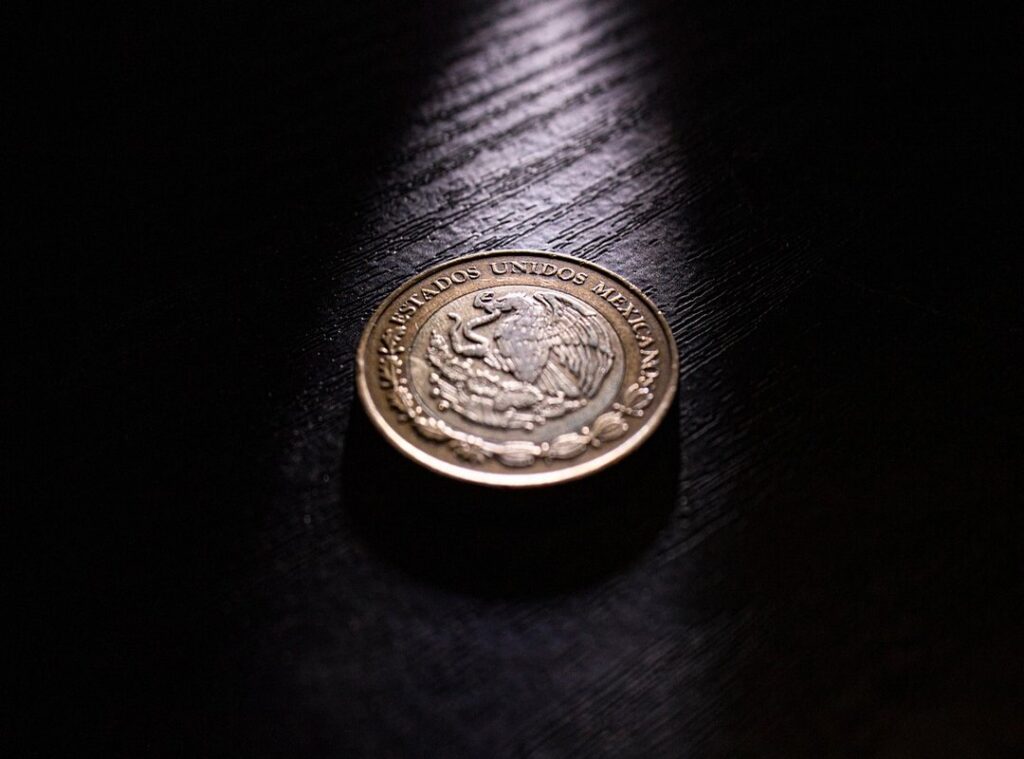
Right now, 150 Mexican Pesos (MXN) is worth about 14,200 Chilean Pesos (CLP). But hey, that rate changes every day. So, how do you find the live rate?
Don’t worry, I’ll show you.
I know it can be confusing. But trust me, understanding this stuff can save you a lot of money. Banks and exchange services often have their own rates, which can be different from the real rate.
We’re going to break it down step by step. You’ll learn how the conversion works, what factors influence the rate, and the smartest ways to exchange your money.
By the end, you’ll have a solid grasp on converting 150 pesos mexicanos a peso chileno and more. Let’s dive in.
What is an Exchange Rate? Understanding the MXN to CLP Value
An exchange rate is just a way to compare the value of one currency to another. For example, how many Chilean pesos (CLP) you get for one Mexican peso (MXN).
The mid-market rate is the real exchange rate without any added fees. It’s what you see on Google or XE.com. This is the fairest rate and the one you should aim for when converting money.
But here’s the catch. When you go to a bank or a currency exchange service, they don’t use the mid-market rate. Instead, they have a buy rate and a sell rate.
The buy rate is what they pay you for your MXN, and the sell rate is what they charge you for CLP. This difference is how they make a profit.
Think of it like a wholesale vs. retail price. The mid-market rate is the wholesale price, and the rates you get from banks are the retail prices. The spread or margin between these two is their profit.
Here’s a simple example. If the mid-market rate is 1 MXN = 55 CLP, a bank might sell you CLP at a rate of 1 MXN = 53 CLP. That 2 CLP difference is the bank’s profit.
So, 150 pesos mexicanos a peso chileno means you need to find the best rate to get the most CLP for your MXN. Always try to find a service with a rate as close to the mid-market rate as possible.
In the future, I predict that more transparent and competitive services will emerge, making it easier for consumers to get closer to the mid-market rate. But for now, it’s all about doing your research and finding the best deal.
How to Calculate 150 MXN to CLP in 3 Simple Steps
Converting currency can seem daunting, but it’s actually pretty straightforward. Let’s break it down into simple steps.
First, find the current mid-market exchange rate for MXN to CLP. Reliable sources like Google Finance, XE.com, or Reuters are great for this.
Next, write down the formula: Amount in CLP = (Amount in MXN) x (Current MXN to CLP exchange rate).
Now, let’s walk through an example. If the current rate is 1 MXN = 54.80 CLP, the calculation is: 150 MXN * 54.80 = 8,220 CLP.
To do the reverse calculation (CLP to MXN), just divide instead of multiply. For instance, 8,220 CLP / 54.80 = 150 MXN.
Understanding the basic math helps you spot bad deals and hidden fees. Even though online converters are fast, knowing how to do it manually gives you an edge.
By following these steps, you can easily convert 150 pesos mexicanos a peso chileno. It’s all about keeping it simple and staying informed. 150 pesos mexicanos
What Makes the Mexican and Chilean Peso Exchange Rate Change?

Exchange rates are not fixed. They move up and down all the time based on supply and demand. It can be frustrating, right?
You check one day, and 150 pesos mexicanos a peso chileno seems like a good deal. The next day, it’s different.
National economic health plays a big role. Inflation rates and GDP growth in both Mexico and Chile impact their currencies. If one country is doing better economically, its currency tends to strengthen.
Central bank interest rates also matter. For example, if Mexico’s central bank raises rates, the MXN might get stronger against the CLP. This can make it harder to predict exchange rates, which is a real pain for anyone trying to budget or plan.
Commodity prices are another factor. Chile’s economy relies heavily on copper, and Mexico’s on oil. When these prices go up or down, it affects the value of their currencies.
It’s like a rollercoaster you didn’t sign up for.
Political stability and foreign investment can influence things too. Positive news can attract more capital, making a currency stronger. But political instability can do the opposite, making it weaker.
It’s like watching a game where the rules keep changing.
Understanding these factors helps, but it doesn’t make the constant fluctuations any less annoying. At least now you know what’s behind those changes.
The Best and Worst Ways to Exchange Your Pesos
When it comes to exchanging your pesos, some methods are better than others. Let’s break it down.
Best Option: Online Money Transfer Services (e.g., Wise, Remitly)
These services offer rates closest to the mid-market rate with transparent, low fees. It’s a no-brainer if you want the best value for your money.
Good Option: Using a FinTech or travel-focused debit card
These cards often have low foreign transaction fees. Just make sure to check the withdrawal limits before you go.
Acceptable Option: Withdrawing from a local ATM in Chile
This can be a decent option, but beware of potential bank fees from both your home bank and the local ATM operator. It’s a good idea to call your bank beforehand to understand the charges.
Poor Option: Exchanging cash at your home bank before you travel
Rates here are often poor, and fees are higher. You might end up losing more than you think.
Worst Option: Airport currency exchange kiosks (‘bureaux de change’)
These kiosks have the worst exchange rates and highest fees. They rely on convenience and a captive audience, so they can charge whatever they want.
If you need to convert 150 pesos mexicanos a peso chileno, always aim for the best options first. Trust me, it makes a difference.
Getting the Most Value for Your Money
The value of 150 pesos mexicanos a peso chileno changes daily. The rate you get depends on where you exchange it. Always check the current mid-market rate online before making a transaction to use as your benchmark for a fair deal.
Remember the simple formula: MXN amount * exchange rate. This will help you calculate the value yourself. For the best rates, plan ahead and use a reputable online transfer service instead of relying on last-minute airport exchanges.
 Ask Ruther Stigallions how they got into upcoming arcade game releases and you'll probably get a longer answer than you expected. The short version: Ruther started doing it, got genuinely hooked, and at some point realized they had accumulated enough hard-won knowledge that it would be a waste not to share it. So they started writing.
What makes Ruther worth reading is that they skips the obvious stuff. Nobody needs another surface-level take on Upcoming Arcade Game Releases, Arcade Gaming News, Esports Coverage in Arcade Games. What readers actually want is the nuance — the part that only becomes clear after you've made a few mistakes and figured out why. That's the territory Ruther operates in. The writing is direct, occasionally blunt, and always built around what's actually true rather than what sounds good in an article. They has little patience for filler, which means they's pieces tend to be denser with real information than the average post on the same subject.
Ruther doesn't write to impress anyone. They writes because they has things to say that they genuinely thinks people should hear. That motivation — basic as it sounds — produces something noticeably different from content written for clicks or word count. Readers pick up on it. The comments on Ruther's work tend to reflect that.
Ask Ruther Stigallions how they got into upcoming arcade game releases and you'll probably get a longer answer than you expected. The short version: Ruther started doing it, got genuinely hooked, and at some point realized they had accumulated enough hard-won knowledge that it would be a waste not to share it. So they started writing.
What makes Ruther worth reading is that they skips the obvious stuff. Nobody needs another surface-level take on Upcoming Arcade Game Releases, Arcade Gaming News, Esports Coverage in Arcade Games. What readers actually want is the nuance — the part that only becomes clear after you've made a few mistakes and figured out why. That's the territory Ruther operates in. The writing is direct, occasionally blunt, and always built around what's actually true rather than what sounds good in an article. They has little patience for filler, which means they's pieces tend to be denser with real information than the average post on the same subject.
Ruther doesn't write to impress anyone. They writes because they has things to say that they genuinely thinks people should hear. That motivation — basic as it sounds — produces something noticeably different from content written for clicks or word count. Readers pick up on it. The comments on Ruther's work tend to reflect that.