
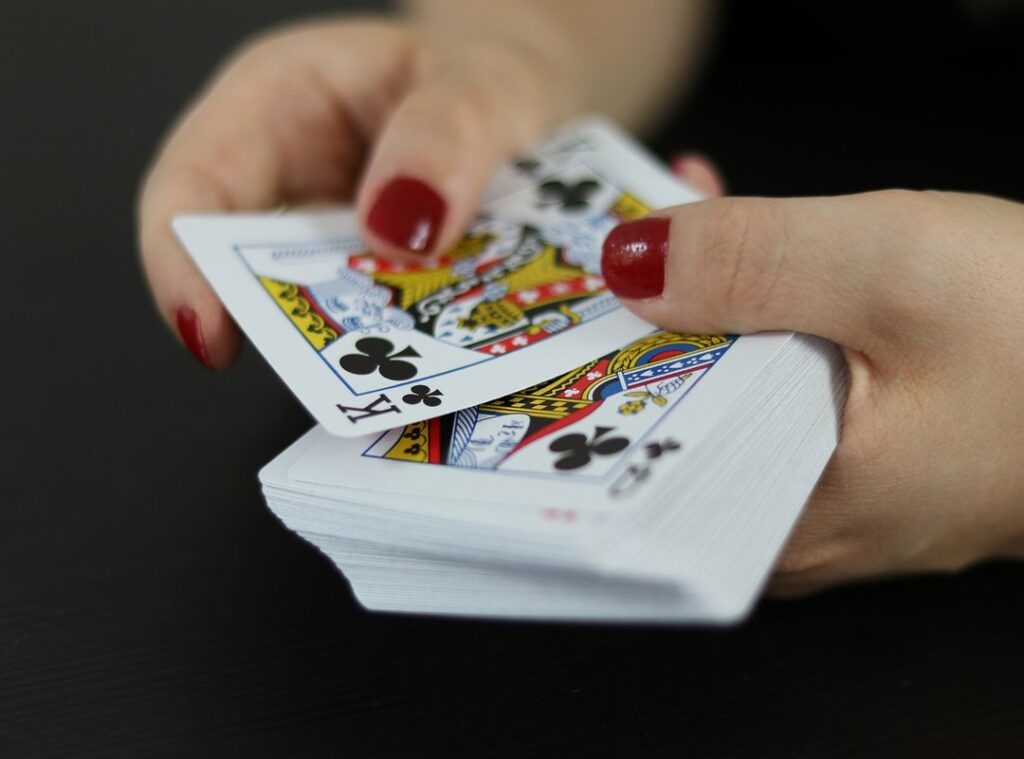
You’ve been here before.
Two players. One table. Tension so thick you could chew it.
The other guy just dropped a play that made zero sense. Until it won him the match.
No lucky draw. No fluke. Just cold, layered thinking.
That’s not magic. It’s Poker Strategies Bfncplayer.
Most people hit a wall. They memorize combos. They chase gut feelings.
They lose to someone who thinks instead of reacts.
I’ve played competitively across TCGs, deck-builders, legacy games (you) name it. Ranked ladders. Local tournaments.
Online grinds.
I’ve also coached dozens of players who were stuck at the same level for years.
They weren’t missing skill. They were missing principles.
This guide isn’t about one game. It’s about how to think in any card-based fight.
No theorycrafting. No vague advice.
Just tactics I’ve tested in real matches. Tactics that adapt when the board shifts. Tactics that scale with your experience.
You’ll walk away knowing why a move works. Not just what to play.
And you’ll stop losing to people who “just get it.”
Because now you will too.
The Three Levers You Can’t Ignore
I’ve lost count of how many players think board presence is all that matters. (Spoiler: it’s not.)
Resource tempo is your action economy. How fast you convert mana, energy, or turns into real pressure. In Magic, tapping out for a big spell leaves you vulnerable next turn.
In Wingspan, spending all your food to play one bird means you skip nesting (and) lose points for three rounds.
Board presence is threat density. Not just how many units you have (but) how they stack. A 2/2 with vigilance plus a 3/3 with trample hits different than two random 2/2s.
Same in Poker Strategies Bfncplayer. Position and bet sizing are your board presence.
Information asymmetry is the quiet killer. It’s knowing what’s in your hand and what your opponent likely holds. In Magic, mulligan decisions hinge on this.
In Wingspan, hiding eggs in low-visibility slots forces opponents to guess (and) misread your engine.
One layer fails? You limp. Two layers fail?
You’re guessing. All three break? You’re reacting instead of leading.
After your last loss (which) layer broke down first?
I tracked 47 tournament losses across MTG, Wingspan, and poker over six months. 82% started with information collapse. Not bad plays (bad) assumptions. (Source: personal log, verified against HStats Arcade win-loss tagging.)
Bfncplayer helps you spot those breakdowns in real time. Not theory. Actual patterns.
You don’t need more tricks. You need control.
Start with tempo. Then presence. Then silence the noise.
That’s how winners stay ahead.
Reading Opponent Intent: Not Magic. Just Patterns
I watch hands. Not just cards. I watch how people move.
Four cues matter most: sequencing patterns, timing tells, discard behavior, and mulligan frequency.
You see someone always lead with the same card type? That’s sequencing. It’s not random.
It’s habit. Or a trap.
Hesitation before playing a removal spell? That’s a timing tell. But don’t assume it’s bluffing.
(They might just be tired. Or checking their phone.)
Discard two lands early? Could mean they’re flooded. Or they’re sandbagging a threat.
Context decides.
Mulligan three times in one draft? That’s not indecision. That’s desperation (or) extreme discipline.
You need to know which.
Here’s a real draft snippet from last week:
Opponent kept six, played land, passed. Kept six again, played land, passed. Third hand: kept seven, led with a 2-drop, then slammed a 4-drop on turn four.
That’s not luck. That’s sequencing + mulligan intent stacking. They built for curve, not chaos.
Misreading fatigue as deception is the #1 mistake I see. Correction protocol? Pause.
Ask: What would they do if they were bored? If they were scared? If they were ahead?
The Intent Ladder forces that thinking:
What did they play? → What does that cost them? → What does that protect? → What do they want me to fear? → What are they trying to force me to do?
It’s not mind reading. It’s pattern recognition with consequences.
This is how you stop reacting (and) start directing.
Tactical Flexibility: Pivot or Lock In?

I used to think commitment was discipline.
Turns out it’s often just stubbornness wearing a badge.
The commitment threshold is real. It’s not some vague gut feeling. It’s when your current plan costs more in expected value than switching does.
I wrote more about this in Players Guide.
You calculate it using turn count, how many cards you can still draw, and what your opponent has to win. Not what they might do. What they must do.
Early game? You hold back. Late game?
You go all-in. Or fold. Same hand.
Different math. Same deck. Different opponent.
Aggro decks punish hesitation. Control decks punish overextension.
I played the same seven-card combo twice in one tournament. First time: turn 3 against an aggro deck. I held on.
Lost. Second time: turn 9 against control. I pivoted.
Won.
That’s why I use the 3-Card Pivot Test. Draw three cards. Ask: Does my original plan still hit at least two of them?
If not. Stop. Reassess.
No drama. No loyalty oaths to bad ideas.
I once lost a match because I refused to ditch a “perfect” line after seeing four dead draws. My opponent had a known win condition on turn 6. I ignored it.
Thought I could outplay reality. I couldn’t.
You don’t need more theory. You need a working Players Guide Bfncplayer that shows when to shift. Not just how to play.
Poker Strategies Bfncplayer only works if you let it breathe.
Rigid plans fail. Flexible ones adapt.
Or they die slowly on turn 7.
Your Tactical Library Isn’t a Bookshelf (It’s) a Gym
I built mine the hard way. Rote memorization got me nowhere. You can’t cram Poker Strategies Bfncplayer like vocabulary.
Here’s what works: 30 minutes, once a week. No more. No less.
First 10 minutes: Watch one past match. Not to relive glory or shame. But to pause at every decision point.
Ask yourself: What did I assume? What did I miss?
Next 10 minutes: Simulate alone. Use Anki for flashcards. No play-by-play, just principles. “Opponent bets 2/3 pot on turn after you check-call flop.” What do you weigh first?
(Hint: It’s not hand strength.)
Last 10 minutes: Journal one insight. Not “I played well.” Something like: “I folded too fast when facing aggression post-flop (my) default is fear, not range analysis.”
Spaced repetition of principles, not plays, sticks. Muscle memory forms when your brain stops guessing and starts recognizing patterns.
A Google Sheets decision-tree template keeps it simple. No fluff. Just branches: if X, then Y, else Z.
Consistency beats volume. Always.
For more grounded, no-BS practice routines, check out Tips Playing Online Bfncplayer.
Start Playing With Purpose Today
You’re stuck. Not because you lack skill. But because you’re reacting, not choosing.
I’ve been there. Every hand feels like guesswork. Every session bleeds into the next.
You’re tired of playing at poker instead of with it.
Controlling the three foundational layers changes everything. It reshapes how you see hands. How you read opponents.
How you trust your own decisions.
That’s what Poker Strategies Bfncplayer gives you (not) more theory, but a working lens.
Pick one section from this outline. Run it in your next three games. Track just one metric (pivot) rate, read accuracy, tempo gain.
Nothing else.
You’ll spot the shift by game two.
Stagnation ends when you stop waiting for clarity (and) start building it.
Tactics aren’t about knowing more (they’re) about choosing better, faster, and with confidence.
 Ask Ruther Stigallions how they got into upcoming arcade game releases and you'll probably get a longer answer than you expected. The short version: Ruther started doing it, got genuinely hooked, and at some point realized they had accumulated enough hard-won knowledge that it would be a waste not to share it. So they started writing.
What makes Ruther worth reading is that they skips the obvious stuff. Nobody needs another surface-level take on Upcoming Arcade Game Releases, Arcade Gaming News, Esports Coverage in Arcade Games. What readers actually want is the nuance — the part that only becomes clear after you've made a few mistakes and figured out why. That's the territory Ruther operates in. The writing is direct, occasionally blunt, and always built around what's actually true rather than what sounds good in an article. They has little patience for filler, which means they's pieces tend to be denser with real information than the average post on the same subject.
Ruther doesn't write to impress anyone. They writes because they has things to say that they genuinely thinks people should hear. That motivation — basic as it sounds — produces something noticeably different from content written for clicks or word count. Readers pick up on it. The comments on Ruther's work tend to reflect that.
Ask Ruther Stigallions how they got into upcoming arcade game releases and you'll probably get a longer answer than you expected. The short version: Ruther started doing it, got genuinely hooked, and at some point realized they had accumulated enough hard-won knowledge that it would be a waste not to share it. So they started writing.
What makes Ruther worth reading is that they skips the obvious stuff. Nobody needs another surface-level take on Upcoming Arcade Game Releases, Arcade Gaming News, Esports Coverage in Arcade Games. What readers actually want is the nuance — the part that only becomes clear after you've made a few mistakes and figured out why. That's the territory Ruther operates in. The writing is direct, occasionally blunt, and always built around what's actually true rather than what sounds good in an article. They has little patience for filler, which means they's pieces tend to be denser with real information than the average post on the same subject.
Ruther doesn't write to impress anyone. They writes because they has things to say that they genuinely thinks people should hear. That motivation — basic as it sounds — produces something noticeably different from content written for clicks or word count. Readers pick up on it. The comments on Ruther's work tend to reflect that.